Solar energy development has expanded rapidly across rural America, and with that growth comes a practical question that landowners and developers often underestimate: what does it take to fence a solar farm properly? The answer involves more than just running a perimeter. It requires understanding regulatory expectations, selecting the right materials, and working with an experienced contractor who knows how to handle large-scale agricultural and commercial fencing projects.
Why Solar Farm Fencing Matters
A solar farm represents a significant financial investment, and the fencing that surrounds it serves as the first line of defense against theft, vandalism, wildlife intrusion, and unauthorized human access. Beyond security, proper fencing is often required by local zoning authorities, utility companies, and insurance providers before a solar installation can go live. Cutting corners on fencing is not an option when the stakes are this high.
The right fence also plays a role in land stewardship. Many solar farms are built on agricultural land, and maintaining the integrity of that land, including managing wildlife and livestock interactions, is part of responsible development.
Common Fencing Requirements for Solar Farms
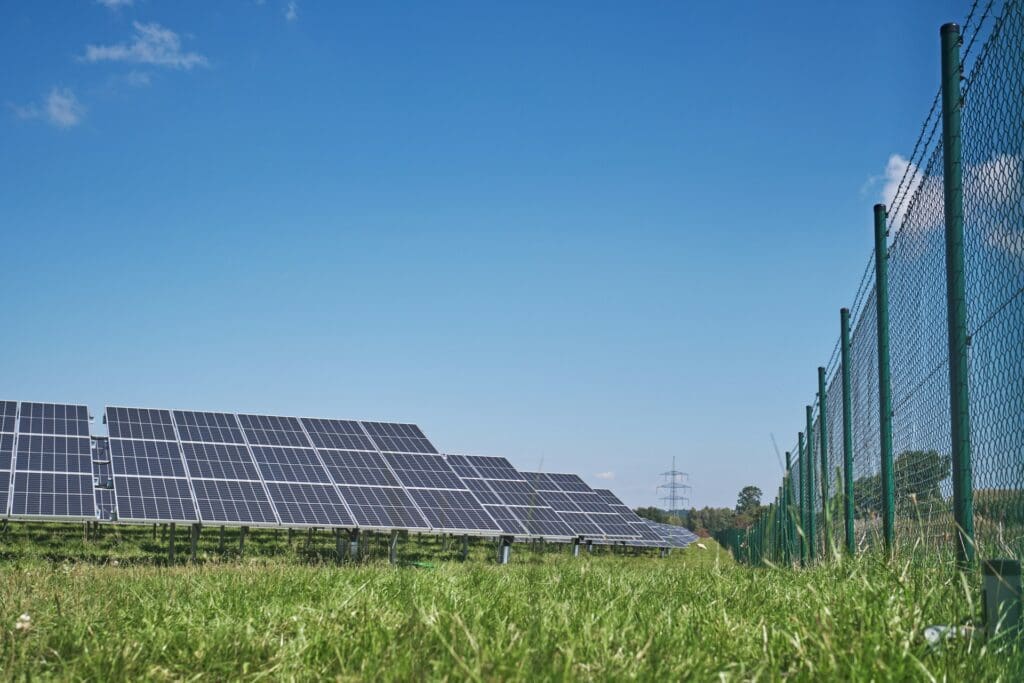
While requirements vary by state and municipality, most solar farm fencing projects share a common set of baseline expectations. Perimeter fencing is typically required to be a minimum height, often six to eight feet, to deter both human and animal intrusion. Gates must be lockable and meet specific width standards to allow maintenance vehicles access. Signage indicating electrical hazards is generally required at regular intervals along the fence line.
In many jurisdictions, the fence must be installed before the system becomes operational. Local permitting offices and utility interconnection agreements often spell out specific material and installation standards that must be met and documented.
Choosing the Right Fencing Materials
Not all fencing materials are suited for the demands of a solar farm. Chain-link fencing is a common choice for its visibility and durability, but high tensile fence options have become increasingly popular for larger rural installations because of their strength, longevity, and lower long-term maintenance costs. High tensile wire can span long distances without sagging and holds up well under the environmental stress that comes with open land exposure.
For projects where wildlife pressure is a concern, particularly in areas where deer populations are dense, incorporating deer fence installation techniques into the solar farm perimeter can prevent animals from damaging panels, wiring, and ground-mounted equipment. Deer and other large wildlife can cause costly damage if not properly excluded from the site.
Installation Considerations for Large-Scale Projects
Solar farms are rarely installed on flat, simple terrain. Many sites involve rolling hills, wet ground, rocky soil, or dense vegetation that complicates fence installation significantly. A contractor who has only worked in ideal conditions will struggle when the land pushes back.
Proper farm fence installation at this scale requires careful planning, the right equipment, and a crew experienced in adapting to whatever the land presents. Corner posts and bracing must be engineered to handle the tension across long fence runs. Gate placements need to account for both operational access and security. And every section of the fence must be installed with long-term durability in mind, not just short-term compliance.
Working with a Qualified Fencing Contractor
Choosing the right contractor for a solar farm fencing project is as important as choosing the right materials. This is not a job for a general handyman or a crew without proven experience in large-scale agricultural or commercial fencing.
A qualified ranch fencing company brings the experience, equipment, and workforce to handle projects of any size across any terrain. They understand how to read a site, plan a layout, and execute an installation that will last for decades without requiring constant repairs. Straight Shooter Game Fencing has been doing exactly that for more than 28 years. As a family-owned operation with nationwide capabilities, they handle solar farm fencing projects from the planning stage through final installation, with straightforward pricing and no hidden fees. Their lifetime workmanship warranty means clients are not left wondering whether the job was done right.
Get Your Solar Farm Fencing Done Right
If you are planning a solar development or managing a site that needs a fencing upgrade, working with an experienced contractor from the start will save time, money, and headaches down the road. Straight Shooter Game Fencing is ready to assess your project, provide honest pricing, and deliver the quality solar farm fence installation your investment deserves.
Contact Straight Shooter Game Fencing today to discuss your solar farm fencing needs and get a straightforward quote from a team that knows the land and knows the work.