
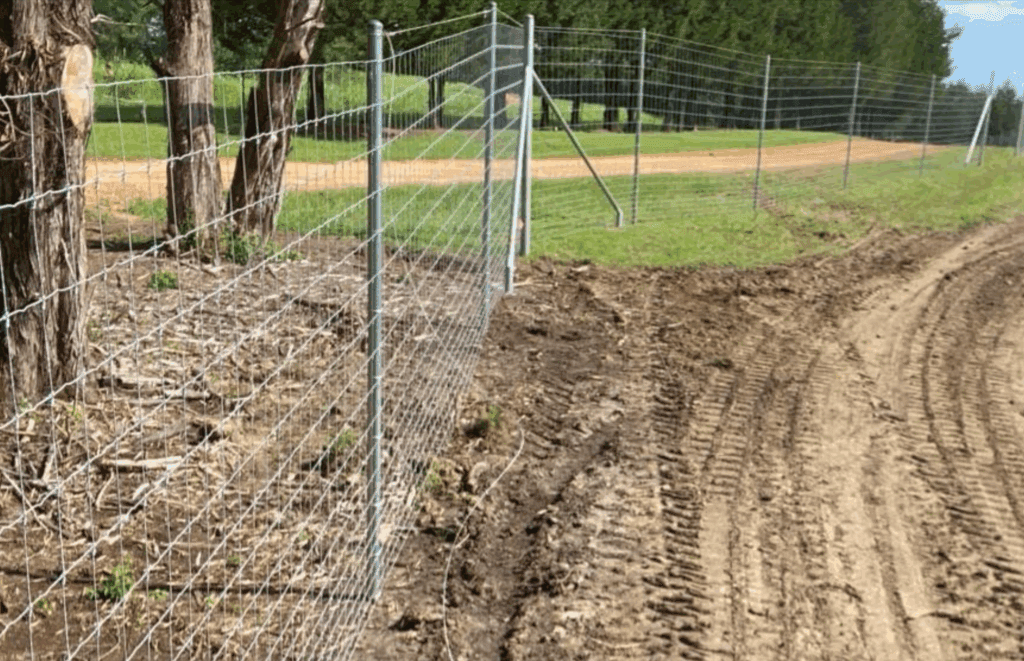
Installing or upgrading fencing on a farm is more than just putting up posts and wire. For many farmers, investing in agricultural fencing is about protecting livestock, managing land, safeguarding crops, and building long-term value.
Keep reading to learn more about how much agricultural fencing costs in 2026, the factors that drive those costs, and what practical steps you can take to budget wisely.
Understanding the Basics of Agricultural Fencing
When it comes to agricultural fencing, cost can vary dramatically depending on material type, terrain, size of the enclosure, labor, and whether you include gates or specialized features. Recent data show a wide range of typical per-foot or per-acre costs that farmers should expect.
As you plan for 2026, you will want to understand:
- What type of material you will use (woven wire, barbed wire, high-tensile, post & rail)
- The amount and length of fence needed (perimeter size, pasture division, etc.)
- The terrain you are working in (flat vs. rocky, ground clearing required)
- Labor, installation complexity, and any additional features (gates, water gaps, wildlife exclusion)
By breaking it down this way, you will be better able to budget for agricultural fencing rather than just guessing a total number.
Agricultural Fencing Cost by Material Type
Here’s a breakdown of how the material choice affects the cost of agricultural fencing:
Wire Mesh and Standard Field Fence
Standard field fence, no-climb mesh, and woven wire are common options for agricultural fencing. The right choice depends on the animals being contained, the fence height, and the wire gauge needed for your property.
Basic livestock containment on flat, open land has different requirements than fencing on uneven terrain or areas that need additional strength and protection.
High-Tensile
High-tensile wire is often used for larger pastures and long fence runs. Planning these installations involves selecting appropriate post spacing, tensioning systems, and a layout suited to the terrain and livestock.
Premium or Specialty Fencing
Options such as post-and-rail fencing with mesh or pipe fencing can meet specific containment, durability, or appearance goals. These projects may require specialized materials and installation methods to suit your property.
Planning Your Agricultural Fencing Project
Every agricultural fencing project has different requirements. Consider which of the following best describes your needs:
- Basic livestock containment: Standard wire mesh fencing for relatively short perimeters on flat, accessible terrain.
- Pasture fencing: Longer fence runs that may involve varied terrain, high-tensile wire, and additional bracing.
- Specialty agricultural fencing: Projects involving specialized materials, rough terrain, large acreage, custom gates, or wildlife exclusion.
Straight Shooter Game Fencing: Expert Agricultural Fencing
If you’re ready to move forward, Straight Shooter Game Fencing is here for your agricultural fencing project. With decades of experience, we specialize in durable, high-tensile fencing solutions designed for farms, ranches, and rough terrain. We offer transparent pricing and a lifetime warranty on installations.
Contact us at Straight Shooter Game Fencing today to schedule your free on-site consultation and get an accurate estimate for your agricultural fencing project.